

Contents
Buying a home is one of the biggest financial decisions you’ll make in your life. That’s why we’ve produced this guide to help you understand what you need to think about when buying your home or remortgaging.
Buying a home is one of the biggest financial decisions you’ll make in your life. That’s why we’ve produced this guide to help you understand what you need to think about when buying your home or remortgaging. You’ll find a range of information explaining mortgage terminology, the costs involved and how to protect your home and family. Your mortgage and protection adviser is here to help. Our advisers are professionally qualified, with the knowledge and training to help you get the most from your money by identifying your personal financial goals and objectives. They’ll keep you
up-to-date with the ever-changing choice of mortgages from the mortgage market and protection products.
Our expert team of advisers are on hand to talk you through all your financial needs. The Finance Planning Group are regulated by the Financial Conduct Authority (FCA). This means the advice provided by our advisers is monitored and has to be of a certain standard. With their help you can be confident of making the right choices for your future. It really is worth taking their advice.
It's more than just the mortgage, it's protecting your mortgage and loved ones. Buying a home is a big commitment, so your adviser will also talk about the options around helping to protect your home, belongings, health and loved ones.
How would one partner cope financially with the death or critical illness of the other?
Could you afford to maintain your current lifestyle?
Could you afford the financial costs of raising your family?
Pay off your debts.
Who can be covered?
Who do you use?


Borrowing to buy your home...
Make sure you can afford your mortgage before you take it on. If you fall behind with the payments, you could lose your home.
Residential Mortgage
Buy To Let Mortgage
Remortgage
You may have to pay an early repayment charge to your existing lender if you remortgage. Your current lender may also charge you a ‘deed discharge fee’ when you leave your current mortgage. These are all areas your adviser will be able to explain in more detail and help you with. We will need to make similar checks to those made when you first bought your home.
Costs involved with buying a home...
Let's talk about the money you will need to put aside for your move.
Typically between £500 to £1,500
These can be around £80 to £250
These can be around £30 – £60
These should be itemised in the quote provided by your legal adviser
These can be around £50 – £80
The higher the purchase price of a property, the more stamp duty you will pay. Furthermore, if the property you are buying is a buy-to-let or second home the stamp duty increases further. Please see the below table and accompanying examples:
Here are some examples:
Your personal costs...
Let's calculate your fees so that you can budget correctly for your move.
You may be able to afford the deposit and mortgage payments on a new home, but what about the other costs of moving? New research reveals unexpected bills can adds tens of thousands of pounds to the cost of buying and these extras need to be paid upfront.
Moving home can be exciting, but you need to keep an eye on the costs. The estimated average cost of moving in the UK is around £8,885, although this can vary dramatically depending on where you live1.
Here, we break down the cost of moving in to help you avoid any unwelcome financial surprises, whether you’re a first-time buyer or moving to a new home.
How much can you borrow?
Make sure you can afford your mortgage before you take it on. If you fall behind with the payments, you could lose your home.
THIS DEPENDS ON:
- Your income and outgoings.
- Your credit history.
- Whether you’re able or prepared to make changes to your lifestyle that may reduce your outgoings.
- How much deposit you have.
You’ll need to find out how much you can borrow before making an offer on a property. Some lenders will work this out before you find a property – this is called an approval or decision in principle. This will help you know the maximum offer you can make on a property and will also speed up the mortgage process.
Lenders usually base their calculations on your guaranteed earnings such as basic pay, but some will consider part or all of any regular overtime or bonuses. They’ll want to see proof of your income.
HOW LONG WILL MY MORTGAGE LAST?
This is known as the mortgage term. Mortgages usually have a term of between 5 and 40 years. A mortgage should normally be for the shortest term you can afford as this keeps the overall cost down. A longer than necessary term means you’ll pay more interest. It’s advisable that your mortgage term ends before you retire, as it’s unlikely your mortgage repayments will be affordable on a retirement income.
Your adviser will go through your needs and preferences and use these to filter out any mortgage products that don’t meet your requirements. This will reduce the amount of products your adviser will consider for you.
CONSOLIDATING DEBTS
This isn’t suitable for everyone and you’ll need to carefully consider this with your adviser. If you have existing debts, it may be possible for you to add these to your mortgage rather than continue with your
existing repayment arrangements. When you add loans to your mortgage, it’s important to understand the risks:
- Adding short-term loans to your mortgage means you’ll repay them over a longer term. Unsecured loans are generally paid back over a shorter term than mortgage loans. While the interest rate on your mortgage may be lower than you pay on your loans, by adding them to your mortgage you’re likely to pay more over time. It may not be appropriate to consolidate small or short-term debts.
- Your existing debts might not be secured on your property. By adding them to your mortgage they become secured on your property.
Ways to repay your mortgage
Two styles of mortgage - Repayment & Interest only
Repayment mortgages
With a repayment mortgage, your monthly payments to the lender go towards reducing the amount you owe as well as paying the interest they charge. This means that each month you’re paying off a small part of your mortgage.
Advantages
You can see your mortgage getting smaller and provided you maintain the required payments, you also have the certainty your mortgage will be repaid at the end of the term.
Disadvantages
At the start, most of your payments go towards the interest on your mortgage. So in the early years, the amount you owe won’t reduce by very much.
Interest only mortgages
These mortgages are now only offered with very strict criteria and are not available to everyone. With an interest only mortgage you only pay the interest charged on your loan, so you’re not actually reducing the loan itself.
You’ll need to have a feasible repayment strategy in place to repay your loan at the end of the term, for example investments and/or savings plans. Lenders will want to see proof of these.
Interest only is typically recommended for Buy to Let mortgages.
Advantages
If the savings or investment plan you choose performs well, then you could pay off your mortgage earlier compared to a repayment mortgage. At the full mortgage term there may be a lump sum available after the mortgage has been repaid.
Disadvantages
Very few investments or savings plans are guaranteed to repay your mortgage in full. If your savings or investment plan doesn’t cover the full amount, you’ll be responsible for paying the difference. Your mortgage lender can demand repayment, and they’ll charge you interest on any outstanding balance until it’s repaid.
How is interest charged and paid?
There are lots of different interest rate options offered by lenders. Interest rates vary from product to product and are dependent on different factors; for example; fixed rate mortgages, how large a deposit you have. Here is our guide to the different options available.
This is a standard interest rate that can go up or down in line with market rates, such as the Bank of England’s base rate.
Advantages:
You have more flexibility and can usually repay your mortgage without any early repayment charges.
Disadvantages:
Your monthly payments can go up and down which can make budgeting difficult.
SVR mortgages are not usually the lowest interest rates that lenders offer.
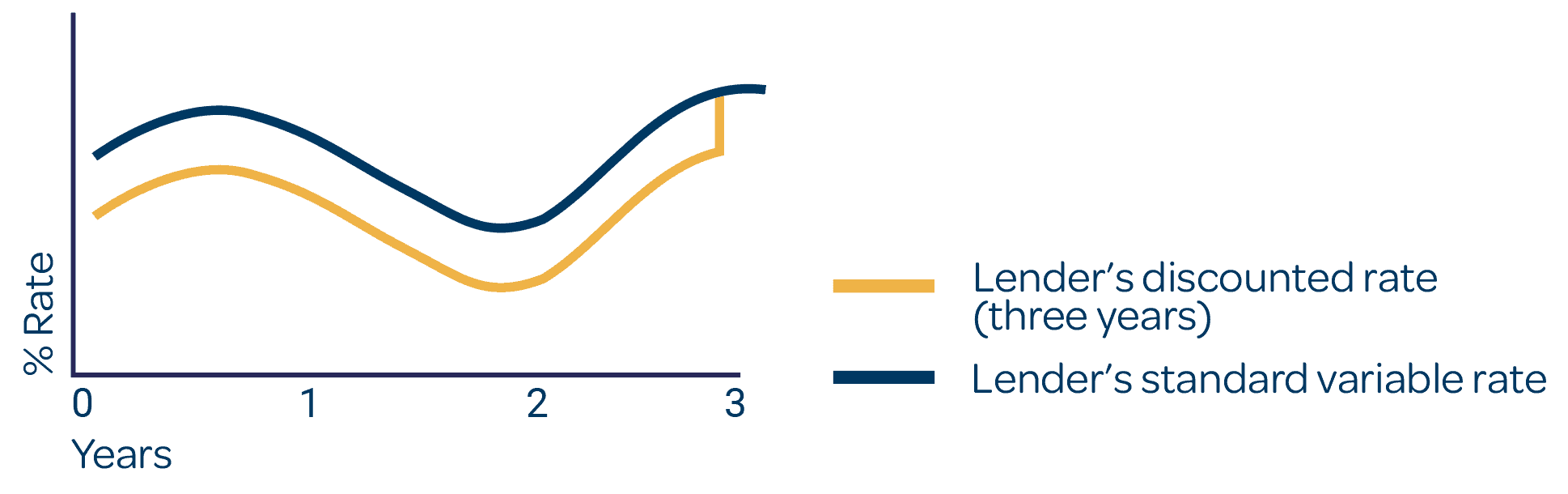
Some mortgages start with an initial interest rate set lower than the SVR for a set period of time. At the end of this period, the lender will change the interest rate to the SVR. It’s a good idea to talk to your adviser at this stage because the lender’s SVR may not be the best deal available.
Advantages:
Your payments could cost you less in the early years, when money may be tight. But you must be confident you can afford the payments when the discount ends.
Disadvantages:
Your monthly payments can go up or down which can make budgeting difficult.
If you want to repay the loan early, there could be an early repayment charge.
This is a standard interest rate that can go up or down in line with market rates, such as the Bank of England’s base rate.
Advantages:
You have more flexibility and can usually repay your mortgage without any early repayment charges.
Disadvantages:
Your monthly payments can go up and down which can make budgeting difficult.
SVR mortgages are not usually the lowest interest rates that lenders offer.
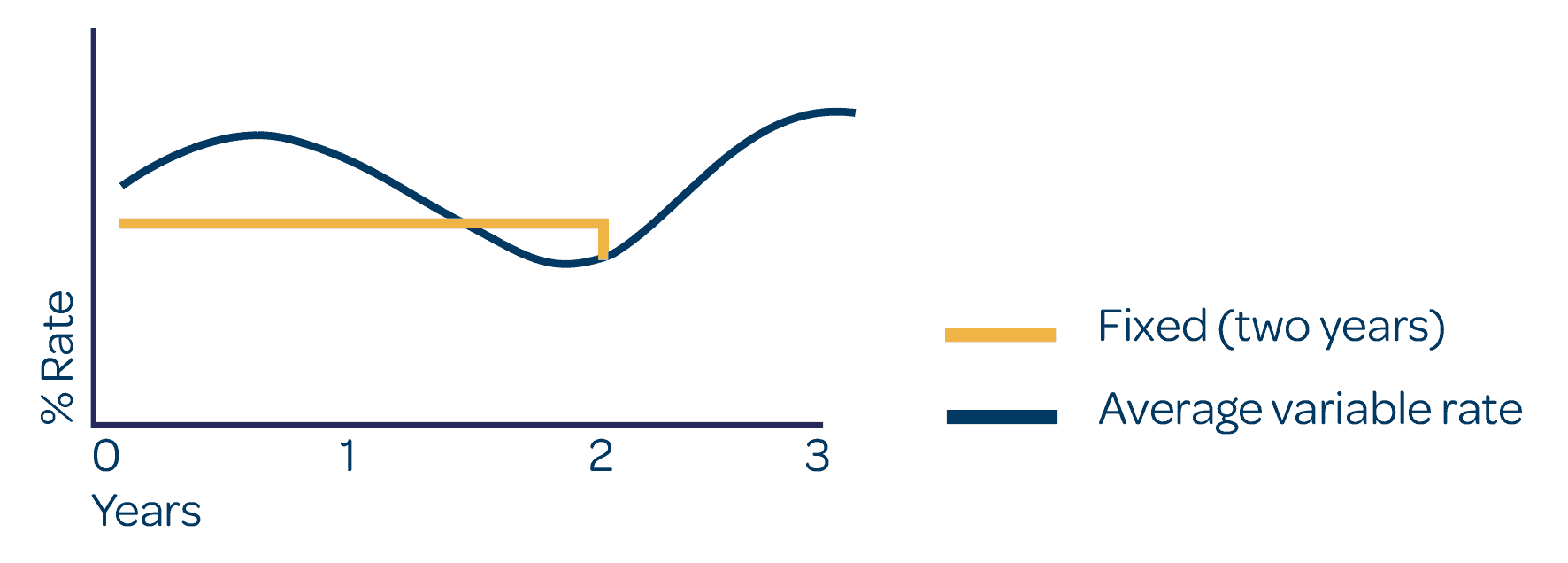
With a tracker mortgage, the interest rate charged by a lender is linked to a rate such as the Bank of England base rate. This means your payments may go up or down.
Advantages:
The rate you pay tracks an interest rate (for example, the Bank of England base rate). If the rate changes the tracker rate changes by the same amount.
Disadvantages:
Some lenders impose a ‘collar’ which means the interest rate won’t fall below a certain level, even if the rate it’s tracking continues to reduce.
Your monthly payments can go up or down which can make budgeting difficult. If you want to repay the loan early, there could be an early repayment charge.
An offset mortgage is generally linked to a main current account and/or savings account which are all held with the same lender. Each month, the amount you owe is reduced by the amount in these accounts before working out the interest due on the loan. This means as your current account and saving balances go up, you pay less mortgage interest. As they go down, you pay more. Linked accounts used to reduce mortgage interest payments do not attract interest.
Advantages:
Mortgage payments can be reduced as savings increase, or you may be able to continue paying a higher level and pay your mortgage off early.
You usually pay tax on your savings. However, if your savings are automatically used to offset your mortgage, you won’t pay income tax on these savings – this is particularly beneficial for higher rate taxpayers.
Disadvantages:
All accounts have to be with one lender/bank.
You need to have a substantial level of savings.
If you want to repay the loan early, there could be an early repayment charge.
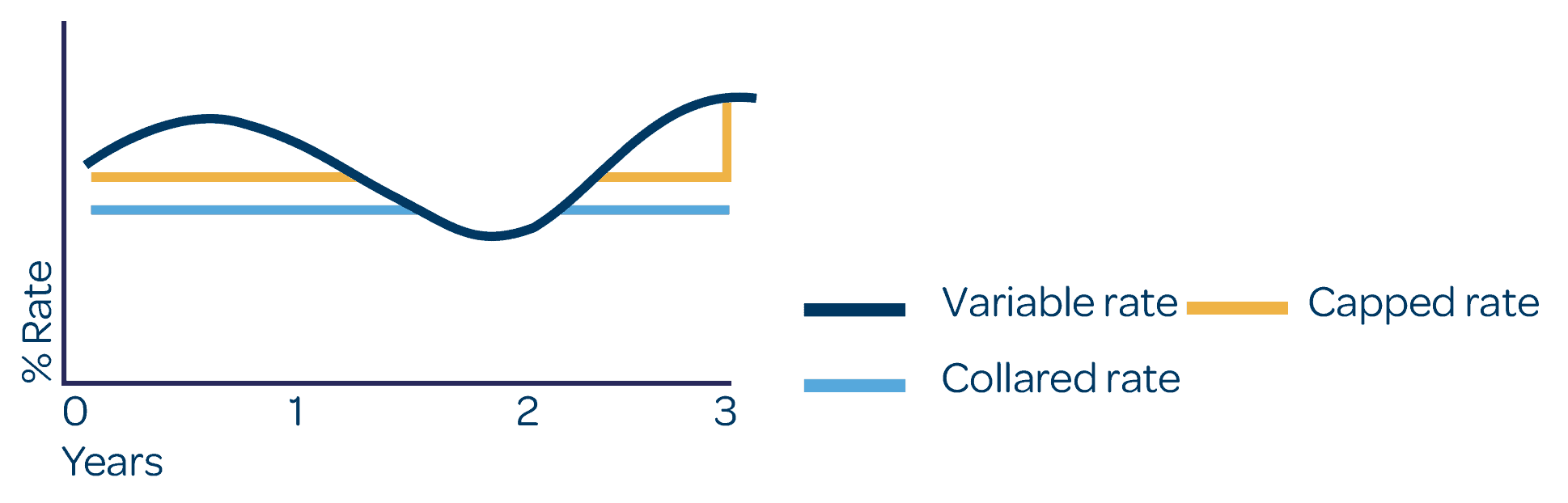
With this type of mortgage, the interest rate is linked to a lender’s SVR but with a guarantee that it won’t go above a set level (called a ‘cap’) or below a certain level (called a ‘collar’) for a set period of time. It’s possible to have a capped rate without a collar.
Advantages:
You know the maximum and minimum you’ll pay for a set period of time making budgeting easier.
These products are useful if you want the security of knowing your payments can’t rise above the set level (the cap), but could still benefit if rates fall during the set period.
Disadvantages:
Even if other rates fall, your interest rate for the set period will not go below the level of the ‘collar’.
If you want to repay the loan early, there could be early repayment charges.
When your income stops, but your bills don’t..
The typical length of time most of us can go without earning any money is only 32 days...
Most of us don’t realise just how quickly the money could run out if anything happened to us or our partners as a result of redundancy, sickness, injury, critical illness, or death. The average UK household would only financially last 32 days before being totally reliant on state benefits, friends or family.
Statutory Sick Pay
You can get £95.85 per week Statutory Sick Pay (SSP) if you’re too ill to work. It’s paid by your employer for up to 28 weeks.
Let’s look at how much you need in order to survive and how you will manage after 32 days…